Paragneiss is gneiss derived from sedimentary rock. Gneiss coarse-grained metamorphic rock with alternating bands of light and dark minerals.

Gneiss Mineral Information Data And Localities
Slate phyllite schist gneiss 42.
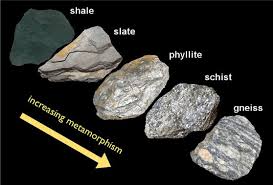
. Gneiss is a high grade metamorphic rock meaning that it has been subjected to higher temperatures and pressures than schist. 32 Foliated metamorphic rocks are composed largely of equidimensional grains of minerals such as quartz and calcite. Gneiss forms at higher temperatures and pressures than schist.
31 At high pressures and elevated temperatures of regional metamorphism silicate rocks are more resistant to flowage and deformation than at low temperatures and pressures. Changes in the mineralogy texture and sometimes the chemical composition of the parent rock. Gneiss is a foliated metamorphic rock that is a common distribute type of rock high-grade regional metamorphic approaches from pre-current formations that have been initially both igneous or sedimentary rocks.
The study of minerals. Describe how a rock may change during metamorphism. Metamorphism is restricted to the contact aureole the zone surrounding the intrusion.
Other articles where metamorphic grade is discussed. Schist medium coarse grained metamorphic rock in which platy minerals are dominant. They are determined by the pressure and temperatures to which the rock has been subjected Such areas are generally referred to as metamorphic core complexes.
With increasing grade of metamorphism the hydrous minerals begin to react with other minerals andor break down to less hydrous minerals. This becomes the sedimentary rock bituminous. 73 Plate Tectonics and Metamorphism.
Contact metamorphism fig1d is a type of high-temperature and low-pressure metamorphism that occurs due to igneous intrusion. Select the possible sources of fluids for metamorphism. The country rock preexisting rock that is intruded is metamorphosed by the rapid and intense rise in temperature.
Which of the following scenarios best describes the formation of hornfels. Very Low Grade Low Grade Medium Grade High Grade. First peat forms from dead plant material in a swamp.
A C grade B low grade 200 C C high grade 600 C D intermediate grade 12 13 How would you correctly refer to the metamorphic grade of a rock that contains bundles of fibrous sillimanite along with pyroxene and sanidine as its highest temperature minerals such as a coarse grained granulite facies gneiss. Gneiss slate schist phyllite marble. It is formed by the metamorphosis of granite or sedimentary rock.
The degree to which a parent rock changes during metamorphism and varies from low grade to high grade. It has a glorious banding which is apparent on microscopic scale and hand specimen. High metamorphic pressures only occur deep inside Earth.
Low grade metamorphic rocks are generally characterized by an abundance of hydrous minerals. Orthogneiss is gneiss derived from igneous rock. Pressure always increases with depth inside Earth.
Table 71 A rough guide to the types of metamorphic rocks that form from different parent rocks at different grades of regional metamorphism. All of the important processes of metamorphism that we are familiar with can be directly related to geological processes caused by plate tectonics. Low-grade metamorphism takes place at temperatures between about 200 to 320 o C and relatively low pressure.
Gneiss is formed by high temperature and high-pressure metamorphic processes acting on formations composed of igneous or sedimentary rocks. Which of the following materials is most closely associated with shock metamorphism and meteorite impact sites. -Intermediate-grade metamorphism-Garnet Slate-Chlorite-Low-grade metamorphism Gneiss-High-grade metamorphism-Sillimanite.
The Piedmont area of Georgia is composed of rocks that were formed at the core of the Appalachians. Furthermore metamorphic differentiation can create compositional layers where none previously existed 2. A S grade B low grade 200 C C high grade 600 C D.
Under confining pressures the stresses on the sides are greater than the force of gravity. ____ is a carbonate rock that forms when the parent rock limestone is subjected to heat. This shiny black fossil fuel is the metamorphic form of bituminous.
Based on that we know that a lot of rock was eroded to expose these rocks. Gneiss displays distinct foliation representing alternating layers composed of different minerals. The relationships between plate tectonics and metamorphism are summarized in Figure 714 and in more detail in Figures 715 716 717 and 719.
The degree or intensity of metamorphism that has affected a rock is called grade of metamorphism Tilley has described as four types of grades 1Very low grade 2Low grade 3Medium grade 4High grade Increasing the grade of. Metamorphic rocks are formed from the older rocks when they are subject to increasing TP chemically active fluid. Section 104 Types of metamorphism and where they occur.
Which of the following rocks represents the highest grade of metamorphism. Which of the following best describes the difference between differential stress and confining pressure. Migmatite sillimanite high-grade metamorphism intermediate-grade metamorphism.
Metamorphic grades refer to the degree and intensity of the metamorphism. Marble nonfoliated metamorphic rock consisting mostly of calcite. But after great pressure bituminous coal becomes the metamorphic rock known as.
In lower grade metamorphic rocks the original fabric of the protolith is indeed often recognizably preserved but higher grade rocks like gneiss show compositional banding which does not need to represent the original banding of the protolith. Gneiss nearly always shows a banded texture. Metamorphism means to change form.
Metamorphic Rocks Science Quizizz
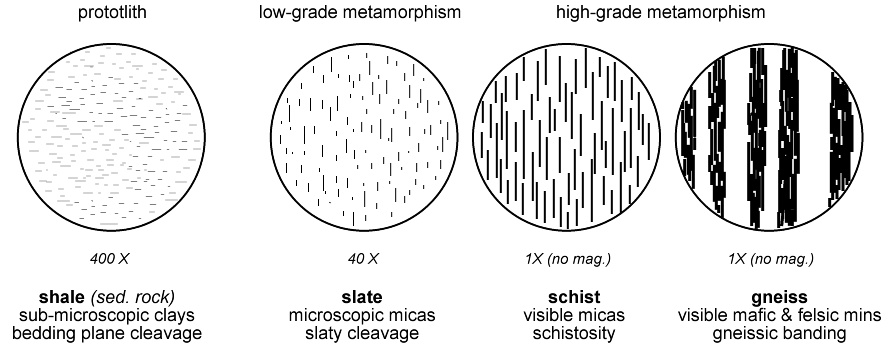
Metamorphic Rocks
What Are The Metamorphic Facies And What Are The Grades Of Metamorphism For Each Of Them Quora



0 Comments